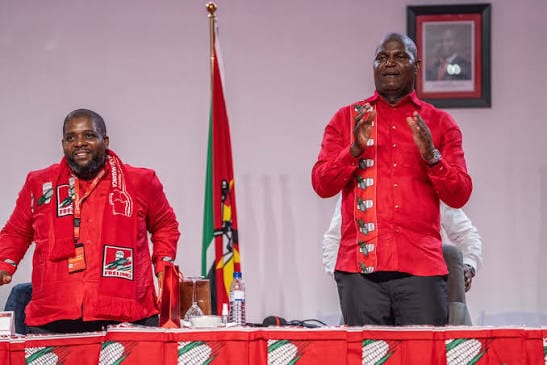
The closing of Mozambique’s ruling Frelimo party’s 11th National Cadres Conference in Chimoio, central Mozambique, was choreographed to convey the picture of a party willing to break up with the past and an attempt for Daniel Chapo, its chairperson, to define the second phase of his leadership: moving from listening to acting, from diagnosing problems to executing solutions, and from promising renewal to testing whether renewal can truly reshape the party from within.
Chapo’s words were striking. He spoke of “rotten fruits” that must fall from the tree, declared that there is no place in Frelimo for corrupt officials, drug traffickers, or criminals, and insisted that each person must answer for their crimes regardless of party affiliation. This direct language distinguishes him from his predecessors, who often avoided confronting internal decay so explicitly. Yet the speech stopped short of naming individuals or outlining mechanisms. The conference was consultative, not deliberative; the real decisions lie ahead in the Central Committee, where entrenched interests remain powerful.
History offers sobering lessons. The late Samora Machel invoked revolutionary morality, Joaquim Chissano promised reforms, Armando Guebuza vowed rigour, and Filipe Nyusi spoke of inclusion. Each raised expectations of renewal, but each ultimately reinforced Frelimo’s long-standing logic: unity above discipline, accommodation above rupture. Chapo’s insistence that renewal means blending tradition with innovation shows he is aware of this dilemma. But it also signals caution: avoiding rupture may preserve cohesion, yet risks reducing renewal to cosmetic change.
Strategically, Chapo is building symbolic legitimacy. His rhetoric may galvanise the base and appeal to citizens weary of corruption. But the test will come when “rotten fruits” are no longer metaphors but names with influence, networks, and power. Resistance will likely emerge from veteran figures, economic elites tied to patronage, and provincial structures that anchor the party’s electoral strength. To succeed, Chapo must convert his narrative into concrete discipline: expulsions, accountability, and reforms that alter the balance of power inside Frelimo.
Chimoio delivered the message. The Central Committee will decide the first steps. But execution will determine whether Mozambique is entering a new era or merely hearing a new political language. For Daniel Chapo, the phase of promise is over. The phase of proof has begun.
@2026, Mozambique Insights. All Rights Reserved