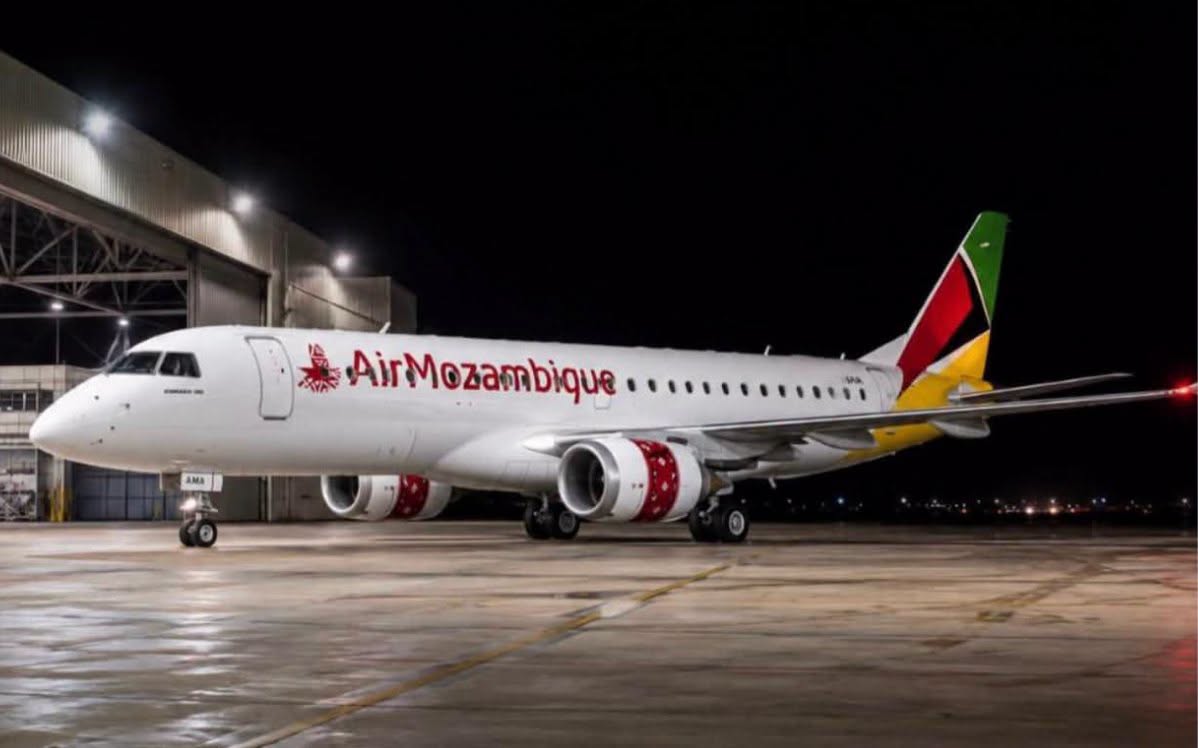
Air Mozambique has officially replaced LAM (Mozambique Airlines), closing the chapter on the troubled national carrier and opening another, not with fireworks or fanfare, but with the quiet weight of a company trying to outfly its past, and whose future will depend far more on real change than on a fresh name.
The new name carries hope, yes, but also the sober understanding that an airline doesn’t heal through branding alone, and that the real test begins now, in the hard work that lies beneath the paint.
It is expected that the rebranding comes with something far more consequential than a fresh coat of paint. Some of Mozambique’s strongest public enterprises – Hidroeléctrica de Cahora Bassa (HCB), Caminhos de Ferro de Moçambique (CFM), and Empresa Moçambicana de Seguros (EMOSE) – have stepped in not just as rescuers, but as new shareholders. They are now part‑owners of the national airline.
It is a moment that feels both hopeful and heavy. For years, LAM survived through government bailouts that kept the airline breathing but never truly alive. Now, instead of the state alone carrying the burden, the country’s most stable public companies have been asked to shoulder it. HCB, with its steady hydropower revenues. CFM, with its vast transport network. EMOSE, with its insurance backbone. They are the ones now holding the airline up.
What does it mean when public enterprises must rescue another public enterprise? It means the government is trying to anchor the airline in institutions with stronger balance sheets and more disciplined management cultures. It also means those institutions, which have their own mandates, their own pressures, their own futures to protect, are now tied to the fate of an airline that has struggled for decades.
And it means something else, too: if Air Mozambique fails, it might likely not fail alone.
The rebranding also arrives after a complicated chapter in LAM’s recent history: its brief, uneasy flirtation with outside management through Fly Modern Ark. The South African company was brought in with promises of operational discipline and commercial revival. For a moment, it seemed like LAM was ready to hand over the controls to someone with fresh eyes and fewer political constraints. But the partnership never settled. It was marked by tension, suspicion, and the quiet resistance that often greets outsiders who try to fix long‑standing internal problems. The experiment failed.
Now Air Mozambique inherits all of that: the weight of the past, the scars of failed partnerships, and the hopes pinned on new shareholders who must somehow do what Fly Modern Ark could not.
LAM’s problems are familiar to anyone who has flown in Mozambique. The delays that stretch into hours, earning the moniker “Late And Maybe”. The aircraft that feel tired. The routes that make little commercial sense but survive because politics demands it. The financial holes that never seem to close. Changing the name is the easiest part; changing the airline is the hardest.
Aviation history is full of stories that show how fragile rebranding can be. Ethiopian Airlines is the continent’s great success story, but its rise had nothing to do with a new logo. It came from professional management, autonomy from political storms, and bold investment in modern aircraft. The new look announced what had already changed inside.
RwandAir’s transformation followed the same logic. The rebrand was part of a national project to turn Kigali into a regional hub, backed by money, strategy and discipline. Air Tanzania’s revival also came with a fresh identity, but the real turning point was the arrival of new aircraft and a more coherent commercial plan.
Then some stories sting. South African Airways changed its image repeatedly, each time promising renewal. None of those promises survived contact with reality. The airline collapsed under the same structural problems it had carried out for decades. Air Zimbabwe tried its own cosmetic refresh, but no amount of branding could hide the operational decay. TAAG Angola Airlines has cycled through visual identities without ever fully escaping the weight of political interference and inconsistent reform.
The lesson is simple enough: rebranding works only when it is the final step in a deeper transformation. When it comes first, or when it stands alone, it becomes little more than a fresh coat of paint on an aircraft that still struggles to take off.
This is the crossroads where Air Mozambique now stands. The arrival of HCB, CFM and EMOSE as shareholders gives the airline something it has not had in years: a financial cushion, a sense of seriousness, and a chance to rebuild credibility. But it also places pressure on these companies, which now carry responsibility for an airline that has consumed public resources for decades without delivering stability.
If the new name is simply an attempt to distance the airline from its past, the public will notice quickly that nothing has changed. But if the rebranding is the opening act of a broader restructuring, one that includes fleet renewal, financial stabilization, new partnerships and a governance model that gives the airline room to breathe, then the name Air Mozambique may eventually carry real weight.
For now, the transformation feels more symbolic than structural. A new identity can reset expectations, but it cannot fix engines, renegotiate debt or redesign a route map. The aviation industry has taught this lesson many times: airlines rise when they reform, not when they repaint.
Air Mozambique may yet become the beginning of a new chapter. But until the deeper work is visible, the country will watch with cautious hope, knowing that a name alone, even one backed by the strongest public enterprises, cannot lift an airline off the ground.
@2026, Mozambique Insights. All Rights Reserved