Mozambican President Daniel Chapo last week revoked the appointment of Waldemar de Sousa as governor of the Banco de Moçambique, the country’s central bank, less than twenty‑four hours after announcing it. Felisberto Dinis Navalha was named instead.
Announcing the volte‑face, government spokesperson Inocêncio Impissa said that Chapo had reversed his initial decision owing to “supervening issues.”
Comment
The decision to appoint Waldemar de Sousa was reckless. His name is woven into the hidden debts scandal, a web of more than $2 billion in secret loans disguised as maritime security projects. That scandal did not stop at Mozambique’s borders. It reached across the Atlantic, ensnaring American investors and shaking trust in the country’s financial integrity.
Its fallout was severe: former Finance Minister Manuel Chang was arrested and sentenced, a reminder that the scandal carried real consequences for real people. Putting Waldemar de Sousa in charge of the central bank would have been a dangerous gamble. Abroad, it would have told Washington and other partners that Mozambique no longer takes accountability seriously. It would have rattled investors, shaking their trust in the institution meant to safeguard monetary stability.
And at the home front, it would have sent a corrosive message: that figures tainted by scandal can be recycled into positions of power, as if the past could simply be brushed aside.
Would de Sousa even be allowed into the foyer of the building where the world’s central bank governors meet? Could he credibly sit across the table from the World Bank or the International Monetary Fund? These are not abstract questions. They cut to the heart of Mozambique’s credibility. A central bank governor must embody trust, not controversy. De Sousa’s appointment would have risked turning Mozambique into a cautionary tale rather than a respected interlocutor.
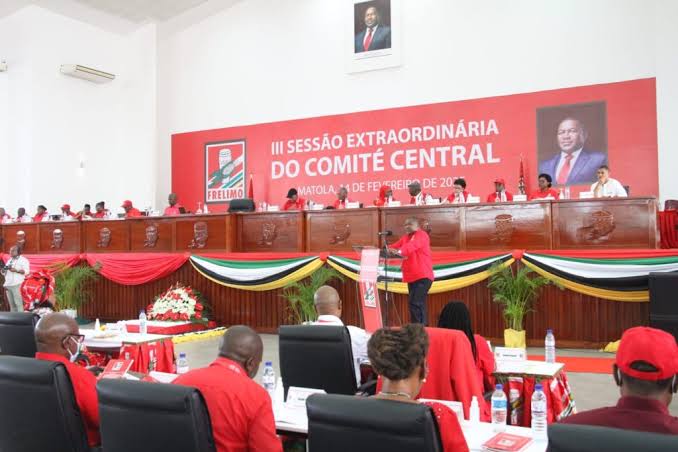
Observers told Mozambique Insights that the decision to appoint de Sousa could only have come from Frelimo’s Political Commission, the most powerful executive body that steers party affairs between Central Committee meetings. They stressed that Chapo’s own legal advisers were left out of the process; a telling omission that lays bare the Commission’s decisive hand, and its final say in matters of such weight.
The current Political Commission is a structure inherited from President Filipe Nyusi’s tenure, and it continues to act as a brake on presidential autonomy. It means Chapo cannot yet force his will over it, especially because he hardly has any political base of his own. Those who believed the party was finally his after the National Cadres’ Meeting are in for a reckoning.
As things stand, the Commission remains the true center of gravity. For now, Chapo governs under its shadow, unable to impose his will without a base of his own. The reckoning is clear: until he reshapes the Commission at Frelimo’s next congress, the party will not truly be his.
The Political Commission’s intervention was therefore not a rescue but a correction of its own misjudgment. It was the Commission that allowed the appointment to proceed, and it was forced to eat humble pie and reverse the decision when the risks became undeniable.
The lesson is stark: the hidden debts scandal still casts a long shadow.
@2026, Mozambique Insights. All Rights Reserved