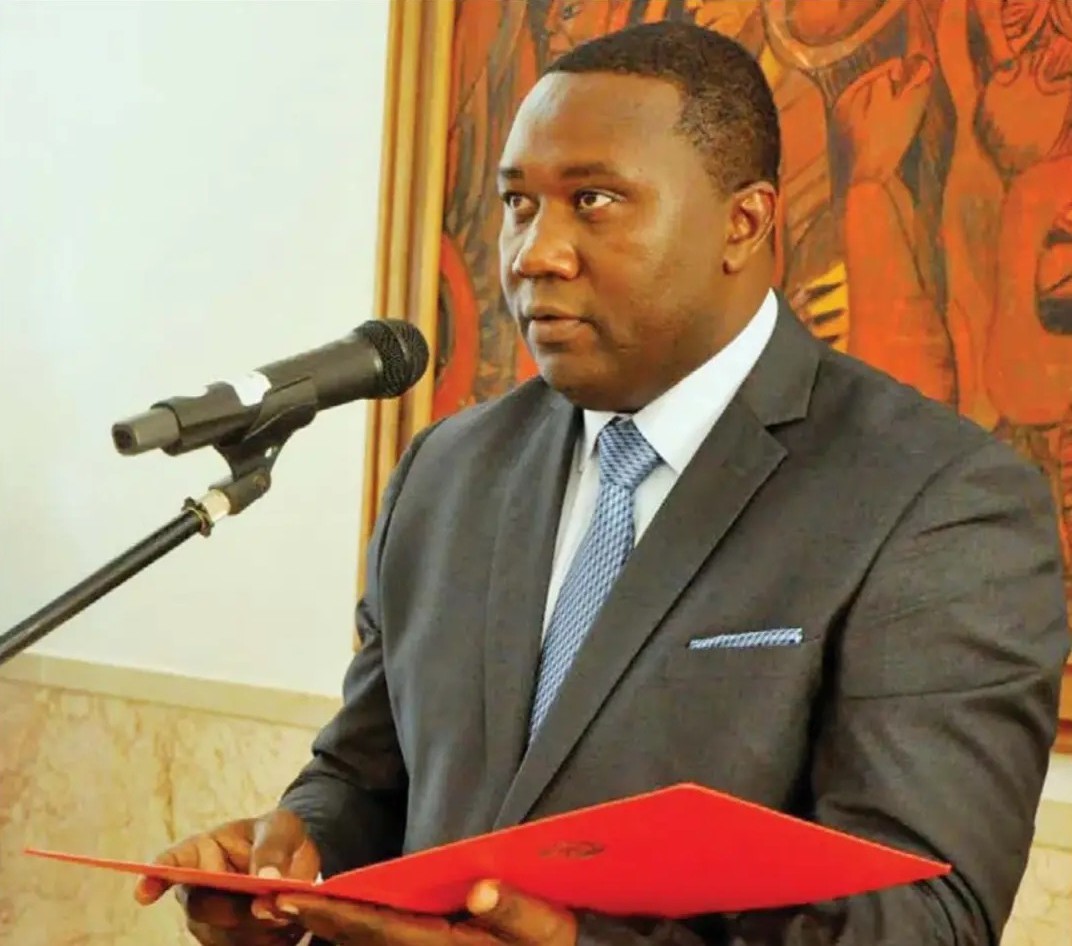
Mozambique’s President Daniel Chapo left the country astonished with a dramatic U‑turn in less than a day. On Monday evening, he announced Waldemar Fernando de Sousa as the new Governor of the Bank of Mozambique, set to take over from Rogério Zandamela.
But by Tuesday afternoon, the decision had been undone. Sousa’s appointment was revoked, and in his place Chapo named Felisberto Navalha as Governor, alongside Benedita Guimino as Vice‑Governor.
The official communiqué spoke vaguely of “supervening issues”, turning Sousa’s return into little more than a fleeting headline, without ceremony or swearing‑in, and leaving the public to wonder what really lay behind such an abrupt reversal.
Comment
This episode is not simply about a change of leadership; it lays bare the fragility of the state’s decision‑making machinery. Waldemar de Sousa’s association with the hidden debts scandal was no secret; it was widely debated and easily accessible. The presidential advisory team should have foreseen the reputational risks of his appointment, yet they seemed to prioritise his institutional experience over the ethical and political consequences. In doing so, the President’s advisers, including the legal office at the Presidency, did not cover themselves in glory. Their failure revealed a deeper weakness: an advisory system unable to balance technical credentials with reputational realities, leaving the Head of State exposed to public embarrassment.
And because there was no public competitive examination to guarantee fairness, transparency, and merit‑based hiring rather than political favouritism, it is clear that Sousa’s name must have come from someone close to the President. That person surely argued in favour of his appointment, pointing to trust and personal networks rather than institutional safeguards. This reliance on informal influence undermines credibility and exposes the Presidency to reputational risk, showing how fragile the system becomes when transparency and merit are sidelined.
The role of the State Intelligence and Security Service is now under scrutiny. SISE is meant to safeguard institutional credibility by thoroughly vetting candidates for strategic posts. Yet the fact that Sousa’s appointment was revoked within 24 hours raises uncomfortable questions: did SISE deliver incomplete reports, omit sensitive information, or simply bow to pressure to rush the process? The vetting looks hurried, reduced to box‑ticking and formal checks, rather than probing reputational vulnerabilities. In stronger systems, vetting is not just about legal eligibility; it asks whether a figure will strengthen or weaken the institution in the eyes of society and international partners.
The way the Presidency communicated the reversal only deepened the unease. The official communiqué spoke vaguely of “supervening issues”, sidestepping any mention of reputational or political pressures. There was no admission of advisory failures, no acknowledgement of vetting shortcomings, and no recognition of the scrutiny coming from markets and multilateral partners. Instead, the narrative was pared down to the bare minimum, designed to quietly correct the error rather than confront it openly. For attentive readers, that silence is telling: the state chose discretion over transparency, leaving citizens and observers to speculate about the real causes behind such a dramatic and unsettling reversal.
The rapid back‑and‑forth of appointments and revocations has left the central bank looking weakened, sending mixed signals to both markets and international partners. At a time of mounting economic pressures and heavy public debt, the authority of the monetary institution is more than symbolic, it is vital. The sudden replacement of Sousa with Navalha and Guimino can be read as an attempt to steady the ship and restore confidence, but it also lays bare how fragile the internal machinery of advice and vetting has become. What should have been a seamless succession instead turned into a public stumble, underscoring the urgent need to strengthen the processes that guide presidential decisions and protect institutional credibility.
@2026, Mozambique Insights. All Rights Reserved