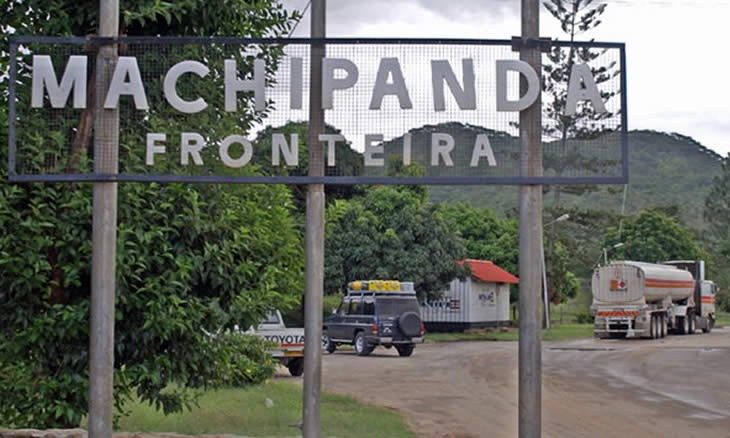
The Mozambican government has awarded a 25‑year public‑private partnership to two Chinese firms to build and operate the new one‑stop border post at Machipanda, the gateway linking the central port city of Beira to Zimbabwe’s interior.
The structure of the deal is straightforward: the two logistics Chinese companies, Union Portlink Capital and Zhongmei Engineering Group, hold the majority stake, the Road Fund contributes 15 percent, and Mozambican private investors complete the shareholding. Construction is expected to begin in October 2026, with a projected cost of $30 million.
This concession joins two other projects already in the hands of the same companies – the Beira Port Access Road and the Dondo Logistics Terminal -, bringing their total investment in the corridor to roughly $160 million. Government spokesperson Inocêncio Impissa said that the new border post should ease congestion and reduce waiting times along a route that sees more than four hundred trucks pass daily.
Comment
There seems to be a certain clarity in Mozambique’s move: the country knows what it wants from the Beira Corridor, and it is acting with purpose. But the Machipanda project also exposes a delicate truth. A one‑stop border post is not a solo performance. It is a duet. And at Forbes, on the Zimbabwean side, the stage lights are still off.
The announcement hints at a tension that has been quietly present for years. A one‑stop border post is not a unilateral achievement. It is a shared institution, a joint choreography between two states. And on the Zimbabwean side, at Forbes, the music has not yet started.
An observer familiar with the process told Mozambique Insights that at one stage Mozambique even attempted to publish a tender for the One-Stop Border Post (OSBP) without first meeting with Zimbabwean authorities. The source added that once the oversight was pointed out, there was a two-day meeting in Mutare, Zimbabwe, aimed at advancing the establishment of a Joint Border Committee (JBC). However, the proposed JBC only met once on 7-9 July, in Beira, with a view to move the two countries away from parallel border management systems towards a coordinated approach based on information sharing, aligned procedures, joint risk management and structured bilateral cooperation.
Against that backdrop, Mozambique’s sudden leap forward with a full PPP tender is surprising, almost abrupt, as if the country decided to move ahead regardless of the pace across the border.
Zimbabwe, for its part, has not announced any plans for the Forbes border post. There is no public indication of how it intends to finance the project, no tender, no contractor, and no sign that the same Chinese companies will be involved across the border.
This silence matters because an OSBP is not just a building. It is an institutional marriage. It requires both governments to align laws, procedures, and digital systems. It demands joint committees, shared inspection protocols, and interoperable customs platforms. It asks for political will on both sides of the frontier. Mozambique has shown its hand; Zimbabwe has not yet placed its cards on the table.
The risk is simple: Machipanda may become a modern, efficient facility waiting for a partner that is still deciding whether to dance. If Harare moves slowly, the corridor will operate with one foot in the future and one foot in the past. Trucks will still queue at Forbes even if they glide through Machipanda. The gains Mozambique seeks – faster clearance, lower costs, smoother regional trade – will remain partial.
What remains to be seen is whether Zimbabwe will match the pace. The next months will be telling. An official announcement from Harare, a financing decision, a tender, or even the creation of a bilateral steering committee would show that the OSBP is truly moving from aspiration to shared reality. Until then, Mozambique advances and waits.
@2026, Mozambique Insights. All Rights Reserved