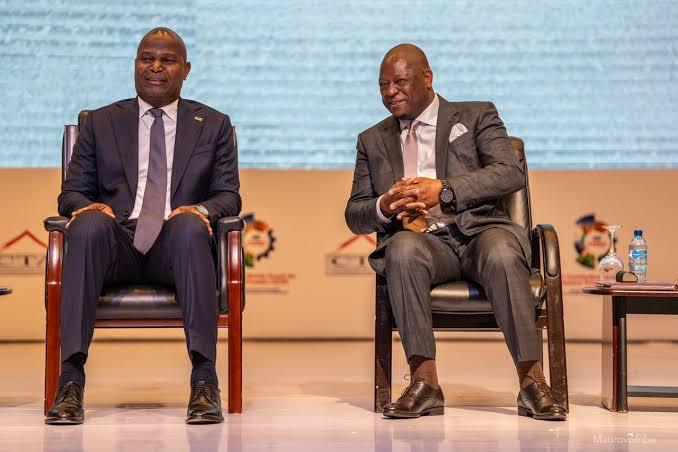
Mozambican President Daniel Chapo used the XXI Annual Private Sector Conference (CASP) to signal a real shift in how his government talks about the economy. “We have about 50 billion dollars of investments in the Rovuma Basin. But what will change Mozambique is not only gas,” he told business leaders and partners.
This is the first time a Mozambican president acknowledges that Mozambique’s gas megaprojects, long treated as the country’s guaranteed path to prosperity, are not sufficient to drive development.
Instead of relying on extractives as a silver bullet, Chapo placed diversification, industrialisation, and a more predictable business environment at the centre of his message. He promised to speed up state reforms, expand digital public services, cut through administrative red tape, and bring more coherence to economic policy. He also spoke candidly about security, noting that kidnappings continue to scare off investors and undermine confidence.
One line in particular resonated with the room: “We cannot have referees who are players.” For many, it was a rare public acknowledgment that the state’s dual role, regulating the economy while also competing within it, creates distortions that discourage investment and weaken trust.
The private sector welcomed the President’s new tone, but their reaction was grounded in day‑to‑day reality. Business leaders pointed to the same obstacles that have held back investment for years: chronic shortages of foreign exchange, heavy taxation, slow and unpredictable fiscal reimbursements, and rules that change without warning. The Confederation of Business Associations (CTA) stressed that companies are still struggling to import basic raw materials because they simply cannot access enough foreign currency. Bureaucracy and legal uncertainty, they warned, continue to drain time, money, and confidence.
Analysis
Chapo’s new framing resonates because it matches what Mozambique has been living for years: slow growth, heavy dependence on extractives, and an economy that struggles to create enough jobs. Growth projections hovering around 3% simply don’t keep pace with a young and rapidly expanding population. Agriculture remains low‑productivity, manufacturing is still too small to absorb labour, and infrastructure gaps continue to hold back competitiveness.
Yet the path to diversification is real. Agro‑processing, light manufacturing, and digital services offer genuine opportunities for Mozambique to broaden its economic base. But these opportunities only become viable if institutions work better; if rules are clearer, processes faster, and decisions more predictable. For years, the “referee‑player” dynamic has blurred the line between regulator and competitor, distorting markets and eroding investor trust. Chapo’s willingness to name this problem matters.
That is why CASP XXI feels like a moment of truth. The yearly conference has generated recommendations for more than two decades, but many remain on paper. This year’s gathering is less about dialogue and more about credibility: can the government turn its new narrative into reforms that actually reduce costs, stabilise rules, and rebuild confidence?
Mozambique stands at a familiar crossroads. The country has abundant potential – natural resources, strategic geography, and a young population full of ambition. But performance continues to lag behind promise. What happens next will determine whether Chapo’s shift in tone becomes a real turning point or simply another missed opportunity in a long cycle of unrealised plans.
@2026, Mozambique Insights. All Rights Reserved