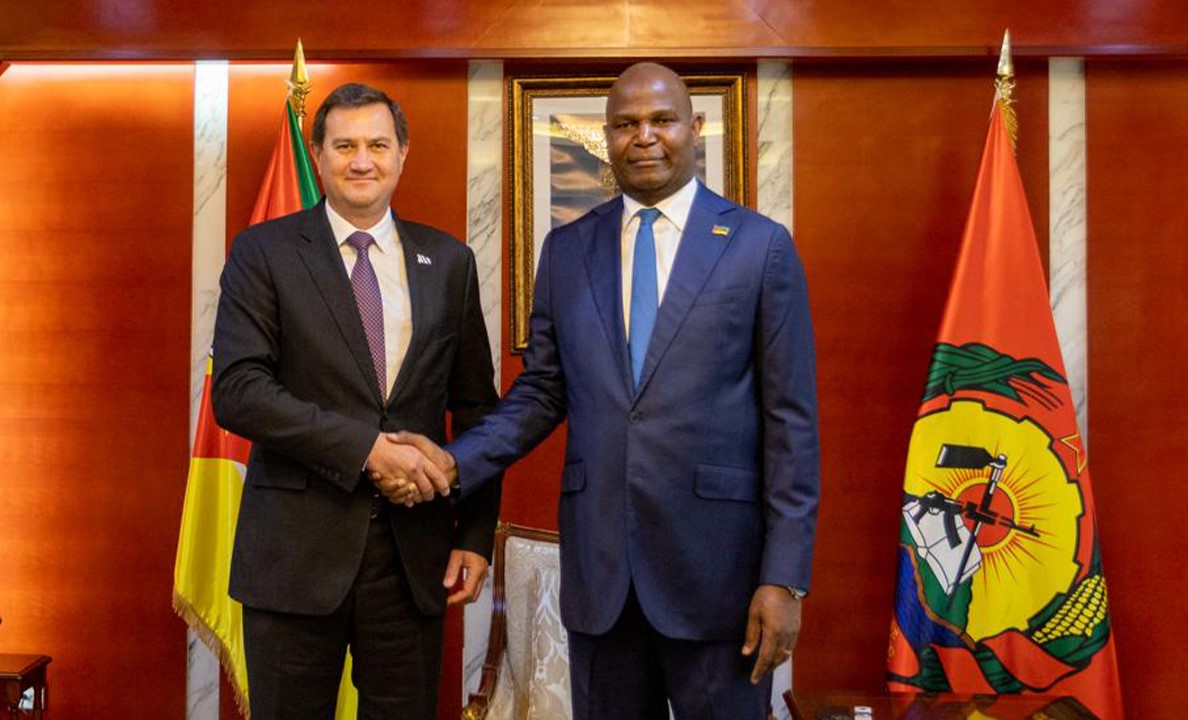
Mozambique received two high‑level Eurasian diplomatic visits in rapid succession this month, signalling a notable intensification of interest from Russia and Belarus in the country’s political, economic and strategic landscape.
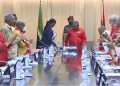
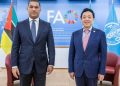
Russia’s Foreign Minister, Sergey Lavrov, visited Maputo first, reaffirming Moscow’s willingness to deepen cooperation in security, energy and economic sectors. Days later, Belarus’s Foreign Minister, Maxim Ryzhenkov, arrived for an official visit from 16 to 18 July; the first by a Belarusian foreign minister since the establishment of diplomatic relations in 2000.
During his stay, Ryzhenkov met with President Daniel Chapo, the Minister of Mineral Resources and Energy, Estêvão Rafael Pale, and the Minister of Agriculture, Environment and Fisheries, Roberto Mito Albino. Discussions focused on cooperation in mining, energy, agriculture, logistics, trade and education. The visit follows three rounds of political consultations and three sessions of the Joint Cooperation Commission held since 2021, as well as regular encounters between officials at major multilateral forums.
In June, Belarusian President Alexander Lukashenko described Mozambique as a potential “strategic platform for Belarus in southeastern Africa,” proposing a logistics corridor linking Belarus, Zimbabwe and Mozambique to secure access to the Indian Ocean and regional markets. The plan envisions using Mozambican ports as gateways for Belarusian exports and as transit points for minerals and agricultural products from southern Africa.
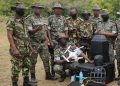
Although the official agenda emphasised economic cooperation, recent developments point to possible expansion into defence. In April, Mozambique accredited its first Defence Attaché to Belarus, Colonel Pedro Tiago Cauwa, who met with Belarusian defence officials to explore cooperation prospects. This marks Mozambique’s first permanent military representation in Minsk.
The move comes as Mozambique continues its efforts to modernise its armed forces after years of combating insurgency in Cabo Delgado. Since the conflict began, Mozambique has received substantial support from the European Union, the United States, the Southern African Development Community (SADC) and other partners, primarily in training, logistics, safe ammunition management, explosive ordnance disposal and non‑lethal equipment. The EU’s EUMAM Mozambique mission exemplifies this approach. U.S. cooperation programs similarly focus on specialised training and technical assistance rather than lethal armament, which Mozambique would hope to receive.
Perhaps, that is the reason a Mozambican delegation recently held discussions in Pretoria with South Africa’s defence industry. While each of these developments could be seen as routine, their convergence raises questions about whether Mozambique is exploring new suppliers of military equipment.
There is currently no public confirmation of negotiations for arms purchases from Belarus, Russia or South Africa. However, Belarus possesses a significant defence industry specialising in the modernisation of Soviet‑origin armoured vehicles, military communications, radars, electronic warfare and maintenance of legacy equipment, systems still used by the FADM.
Comment
The near‑simultaneous visits of Lavrov and Ryzhenkov are not a coincidence. They reflect a diplomatic choreography characteristic of two states that operate today as a tightly aligned bloc. Belarus is Russia’s closest ally, bound by the Union State framework and shared security structures. When Moscow opens a door, Minsk often follows. The timing of the visits – almost back‑to‑back – is itself a message: Mozambique has entered the strategic horizon of both countries.
Africa has become a priority for Eurasian actors seeking new markets, logistical corridors and political allies in the context of Western sanctions and geopolitical isolation. Mozambique offers a rare combination of strategic ports, relative political stability and access to SADC markets. It is therefore unsurprising that both Russia and Belarus are intensifying their engagement at a moment when Maputo is actively diversifying its international partnerships, balancing relations with the EU, U.S., China, India, BRICS and Gulf states.
Belarus’s industrial profile aligns closely with Mozambique’s development needs. The country is a global producer of agricultural machinery, including tractors and harvesters that could support Mozambique’s mechanisation agenda. Its heavy mining equipment, such as BelAZ trucks, is relevant for Mozambique’s expanding graphite, ruby, coal and mineral sands sectors. Belarus is also a major producer of potash fertilizers, which could reduce Mozambique’s dependence on costly imports. Its logistics and railway engineering capabilities fit neatly into the proposed Belarus–Zimbabwe–Mozambique corridor, which would position Mozambican ports as Eurasian gateways to Southern Africa. And its defence industry, specialising in the modernisation of Soviet‑origin equipment, offers capabilities that Western partners do not provide.
The defence dimension remains speculative, but it is a plausible hypothesis. Mozambique’s accreditation of a Defence Attaché in Minsk suggests that the dialogue is expanding beyond trade and agriculture. Combined with contacts in Pretoria and the limitations of Western support, which remains strictly non‑lethal, Mozambique may be exploring alternatives for modernising its armed forces. Belarus is well positioned to offer such alternatives.
What is at stake is more than bilateral cooperation. If the logistics corridor advances, Mozambique could become a Eurasian hub in the Indian Ocean. If defence cooperation expands, Mozambique may diversify its military partnerships beyond the Western sphere. And if political engagement continues at this pace, Mozambique may find itself integrated into a broader Eurasian strategy for Africa, one that blends economic, logistical and potentially defence cooperation.
The obvious but impactful conclusion is that two foreign ministers from allied Eurasian states visiting Maputo in the same week is not routine diplomacy. It is a sign of strategic intent and a reminder that Mozambique’s geopolitical relevance is quietly but steadily increasing.
@2026, Mozambique Insights. All Rights Reserved