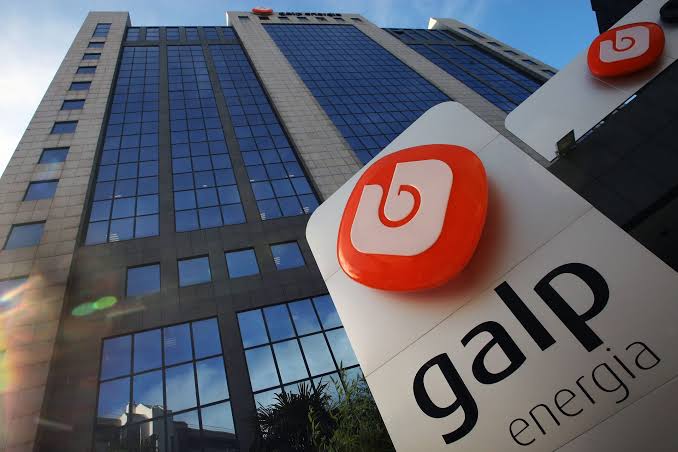
Mozambique’s Tax Authority (AT) has formally notified Galp Energia, the Portuguese multinational energy company, to pay €162 million in capital‑gains tax following the sale of its 10% stake in Area 4 of the Rovuma Basin, in the northern Cabo Delgado province. The stake was sold in March 2025 to XRG P.J.S.C., a special‑purpose company created by ADNOC, the United Arab Emirates’ state oil firm, specifically to execute the acquisition.
The AT’s assessment applies an effective rate of 17.6% to capital gains estimated at around €920 million. Galp acknowledged receiving the notification in its official report to shareholders.
The company, however, contests the tax bill. Galp maintains that its taxable gain amounts to only €26 million, even though it reported €147 million in profit to shareholders from the same transaction. It argues that its deductible investment, the “basic cost”, totals €1.264 billion, while the AT recognizes only €456 million.
Galp has indicated that it intends to challenge the assessment through international arbitration at ICSID, invoking a stabilisation clause in the 2007 concession contract. Defending the case could cost Mozambique between USD 6–8 million in legal fees.
The confrontation has quickly become one of the most significant fiscal disputes in Mozambique’s extractive sector since the landmark Cove Energy case in 2012.
Comment
The headlines have understandably centred on the €162 million tax claim and Galp’s intention to take Mozambique to arbitration. But the deeper story, the one that will shape the country’s fiscal future, lies in how the transaction was structured, what that structure reveals about long‑standing weaknesses in extractive‑sector governance, and the geopolitical weight carried by a dispute involving a Portuguese multinational and a sovereign African state.
What has not been explored is the architecture of the sale itself. Galp did not sell its Mozambican asset. It sold shares in a Dutch subsidiary, Galp Energia Rovuma B.V. This is not a footnote or an administrative convenience. It is a deliberate fiscal strategy known internationally as an indirect transfer of assets. By routing the sale through the Netherlands, Galp shifted the transaction outside Mozambique’s jurisdiction and into a country whose tax regime offers generous exemptions for the sale of shares. Reports note that this structure appears designed to achieve “the payment of no taxes twice,” avoiding taxation both in Mozambique and in the Netherlands.
The second dimension that needs explaining is the extraordinary €808 million gap between the basic cost claimed by Galp and the cost recognized by the Tax Authority. This is not a simple disagreement over accounting. It exposes a chronic governance failure: Mozambique has never built a continuous, transparent system to audit and certify project costs throughout the lifecycle of extractive projects. In the absence of verified cost registers, companies can inflate deductible costs at the moment of sale, dramatically reducing the taxable gain. A Centre for Public Integrity (CIP) report warns that this incapacity “opens space for manipulation, tax evasion and the loss of strategic revenues.”
A third element that deserves far more attention is the nature of arbitration itself. Galp’s move toward ICSID is not simply a legal step. It is a pressure tactic. ICSID (International Centre for Settlement of Investment Disputes) is a World Bank–affiliated tribunal created to resolve disputes between states and foreign investors. Although it presents itself as neutral, ICSID has long been criticised for opacity, high costs, and a structural tilt toward investors. Arbitration is expensive, slow, and procedurally demanding. Mozambique may need between $6-8 million just to defend itself, a devastating cost for a resource‑constrained state. For Galp, this amount is negligible. The CIP report describes this dynamic as a “war of attrition,” where the cost of defending sovereign rights becomes a weapon used to force concessions.
The legal battle itself is more complex than a simple disagreement over contract interpretation. Galp will argue that the stabilisation clause in the 2007 concession contract freezes the fiscal regime, making later laws inapplicable. Mozambique will argue that anti‑avoidance laws are general, non‑discriminatory public‑order norms that cannot be frozen by contract. This is part of a global debate about the limits of stabilisation clauses and the ability of states to update laws to prevent tax avoidance. It has implications far beyond Mozambique, yet it has not been explored in most coverage.
Also, Galp’s dominant shareholder is the Portuguese State. This transforms the dispute from a corporate disagreement into a diplomatic issue involving Mozambique-Portugal relations, EU investment politics, and the responsibilities of state‑owned enterprises abroad. The CIP report explicitly calls for “responsible behaviour by international partners, including the Portuguese State.” This angle matters because it situates the dispute within a broader conversation about how European states behave through their corporate champions in African markets.
Finally, the precedent set by this case will shape multinational behaviour for years. If Galp succeeds, other companies may replicate the strategy, undermining future taxation of LNG, mining, and energy transactions. If Mozambique wins, it strengthens global efforts to combat tax‑base erosion. The CIP report situates the dispute alongside major international cases – Uganda vs. Heritage Oil, Pakistan vs. Tethyan Copper, Ecuador vs. Occidental – showing how arbitration outcomes can reshape national budgets and political trajectories.
Therefore, the dispute is not about €162 million. It is about Mozambique’s ability to tax the true value of its natural resources. It is about whether multinational corporations can use complex structures and costly arbitration to erode fiscal sovereignty. And it is about whether Mozambique can defend its tax base in a global system that often favours investors.
@2026, Mozambique Insights. All Rights Reserved