• About Us
  • Contacts
contact@mozambiqueinsights.com
Mozambique Insights
  • Politics
  • Security
    • Crime
  • Economy
    • Banking & Finance
    • Deals
    • Tenders
  • Resources
    • Oil & Gas
    • Infrastructure
    • Power
    • Mining
  • Climate
    • Wild Life
  • Opinion
    • Editorial
    • Quick Insights
    • Satirical Insights
    • Cultural Insights
  • Podcast
No Result
View All Result
  • Politics
  • Security
    • Crime
  • Economy
    • Banking & Finance
    • Deals
    • Tenders
  • Resources
    • Oil & Gas
    • Infrastructure
    • Power
    • Mining
  • Climate
    • Wild Life
  • Opinion
    • Editorial
    • Quick Insights
    • Satirical Insights
    • Cultural Insights
  • Podcast
No Result
View All Result
Mozambique Insights
No Result
View All Result
Home Opinion Analysis

CREMOD, COTE and what next?

7 July, 2026
in Analysis, Politics
Reading Time: 5min read
0
CREMOD, COTE and what next?

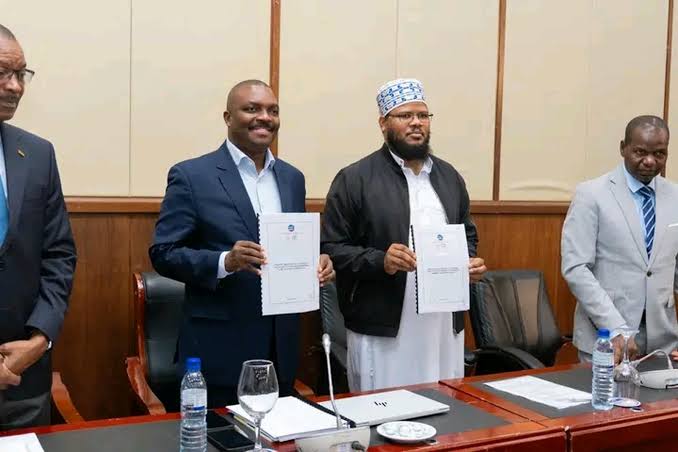
COTE's chairperson, Edson Macuacua (2nd from left), receives polygamy proposal from islamic bodies

Mozambique’s newest opposition party, ANAMOLA, has accused the Technical Commission for the Materialisation of the Political Commitment for an Inclusive National Dialogue (COTE) of failing to comply with the timeline established under Law No. 1/2025.

COTE was created in April 2025 as the institutional mechanism to resolve the postelection crisis, reduce tensions, and negotiate reforms after widespread protests and violence following the 2024 general elections, with the mandate to promote political peace, build national consensus, and advance structural reforms of the State, engaging political parties, civil society organisations, and the private sector. In a public statement, ANAMOLA (National Alliance for a Free and Autonomous Mozambique) called on the Commission’s chairperson, Edson Macuácua, to provide clear explanations regarding the alleged delays.

ANAMOLA argues that the first phase of COTE’s work — which includes public consultations, literature review, and comparative law analysis — should have been completed between September and November 2025. However, according to the party, public consultations are still underway in July 2026, representing a delay of roughly eight months compared to the original timeline.

Beyond the issue of deadlines, the party also criticises the inclusion of topics it considers unrelated to the core purpose of the dialogue, such as proposals concerning the legalisation of polygamy. ANAMOLA maintains that the Commission should prioritise electoral reform, constitutional revision, and the consolidation of the national reconciliation process.

ANAMOLA has also expressed reservations about the introduction, during the consultation process, of three scenarios for State reform, that is, continuity, moderate reform, and deep reform, arguing that these frameworks should have been defined before public consultations began. In the party’s view, this methodological shift may influence how the contributions gathered from citizens and institutions will later be systematised.

Another concern relates to public statements made by some members of the Commission on issues still under discussion. According to ANAMOLA, such interventions risk creating the perception that certain conclusions were already predetermined even before the consultations have formally ended.

On the political front, the party links the delays to the electoral calendar, questioning whether the current pace of work will allow reforms to be implemented ahead of the municipal elections scheduled for 2028 — or whether it could create conditions for a possible postponement of that vote.

Comment

ANAMOLA argues that the challenges facing COTE go beyond missed deadlines, pointing instead to a broader issue of institutional unpredictability. According to the party, its concerns should not be interpreted merely as another episode of political confrontation between Government and opposition, but rather within a wider institutional context.

Before COTE, the previous Government created, in July 2023, the Commission for Reflection on the Model of Decentralised Governance (CREMOD). Over two years, this commission travelled across the country, held public consultations, and gathered contributions from various sectors of society to assess the existing decentralisation model, and submitted the final report to Government in July 2025.

The yet to be made public report presented four alternative proposals for reorganisingdecentralised governance. These proposals were later forwarded for consideration within the framework of the Inclusive National Dialogue, becoming part of the material COTE is expected to analyse.

ANAMOLA argues that this background underscores the need for clearer methodology and strict adherence to legal timelines, warning that failure to do so may undermine public confidence in the reform process.

This means that COTE did not begin its work in an institutional vacuum. It benefited from a prior process of technical reflection and nationwide consultation already carried out by CREMOD. This is precisely where the debate gains greater depth.

Adding the two years of CREMOD’s work to COTE’s mandate, Mozambique is approaching four consecutive years of institutional reflection on core issues of State organisation, decentralisation, and the country’s political architecture. Naturally, reforms of this nature require time. But they also require decisionmaking capacity.

There comes a moment when the successive extension of consultations begins to produce the opposite effect of what was originally intended: instead of strengthening trust, it increases uncertainty about when the reforms will cease to be topics of debate and become concrete decisions. This is the real challenge facing COTE. The issue is not only the duration of the work; it is, above all, the predictability of institutions.

Electoral reforms operate under a specific timetable. The closer they are to the start of a new electoral cycle, the greater the need to ensure that parties, institutions, and citizens know the rules of the process in advance. So far, there is no official indication that the 2028 municipal elections will be postponed. That possibility remains solely a concern raised by ANAMOLA, not a decision announced by the authorities.

Even so, the party’s letter raises a question that merits a public response: What is the actual timeline for political reform today?

Answering that question may prove as important as the substance of the reform proposals themselves. In a democracy, trust in institutions depends not only on the quality of decisions, but also on the ability to make them within clear, predictable, and transparent deadlines.

TIMELINE
• July 2023 – Creation of CREMOD.
• July 2025 – Submission of CREMOD’s final report to the Government.
COTE’s chairperson, Edson Macuacua (2nd from left), receives polygamy proposal from islamic bodies

• April 2025 – Approval of Law No. 1/2025, which establishes the Political Commitment for an Inclusive National Dialogue.

• 2025–2026 – Start and continuation of COTE’s public consultations.
• April 2027 – Scheduled end of COTE’s mandate.
• 2028 – Municipal elections envisaged.

📩

Stay Informed. Stay Ahead.

Get clear analysis, key developments, and stories that help you understand Mozambique — delivered straight to your inbox.

We don’t spam! Read our privacy policy for more info.

Check your inbox or spam folder to confirm your subscription.

@2026, Mozambique Insights. All Rights Reserved

Tags: #COTE#CREMODPost-election Violence; #ANAMOLA;
Share196SendTweet123Share34Scan
Previous Post

ANAMOLA must first govern itself

Leave a Reply Cancel reply

Your email address will not be published. Required fields are marked *

  • Trending
  • Comments
  • Latest
Nyusi succession saga

Nyusi succession saga

29 June, 2023
The Makondes and the crisis in Frelimo

The Makondes and the crisis in Frelimo

15 November, 2023
Waiting to be short-listed

Waiting to be short-listed

14 February, 2024
Frelimo approves bill to change elections announcement date

Frelimo approves bill to change elections announcement date

1
Mozambique playing nice with Israel

Mozambique playing nice with Israel

1
Do the figures back Agricultural Minister?

Do the figures back Agricultural Minister?

1
CREMOD, COTE and what next?

CREMOD, COTE and what next?

7 July, 2026
ANAMOLA must first govern itself

ANAMOLA must first govern itself

23 June, 2026
Not all salaries are created equal

Not all salaries are created equal

3 June, 2026

Subscribe to Our Newsletter

📩

Stay Informed. Stay Ahead.

Get clear analysis, key developments, and stories that help you understand Mozambique — delivered straight to your inbox.

We don’t spam! Read our privacy policy for more info.

Check your inbox or spam folder to confirm your subscription.

  • About Us
  • Contacts
  • Privacy Policy
  • Subscription
Call us: (+258) 84 470 3860
Email: contact@mozambiqueinsights.com

Copyright © FENIX MULTIMEDIA, LDA. Created by MOZAMOR COMERCIAL, E.I

No Result
View All Result
  • Politics
  • Security
    • Crime
  • Economy
    • Banking & Finance
    • Deals
    • Tenders
  • Resources
    • Oil & Gas
    • Infrastructure
    • Power
    • Mining
  • Climate
    • Wild Life
  • Opinion
    • Editorial
    • Quick Insights
    • Satirical Insights
    • Cultural Insights
  • Podcast

Copyright © FENIX MULTIMEDIA, LDA. Created by MOZAMOR COMERCIAL, E.I

Cookie Notice
We use cookies on our website to give you the most relevant experience by remembering your preferences and repeat visits. By clicking “Accept All”, you consent to the use of ALL the cookies. However, you may visit "Cookie Settings" to provide a controlled consent.
Cookie SettingsAccept All
Manage consent

Privacy Overview

This website uses cookies to improve your experience while you navigate through the website. Out of these, the cookies that are categorized as necessary are stored on your browser as they are essential for the working of basic functionalities of the website. We also use third-party cookies that help us analyze and understand how you use this website. These cookies will be stored in your browser only with your consent. You also have the option to opt-out of these cookies. But opting out of some of these cookies may affect your browsing experience.
Necessary
Always Enabled
Necessary cookies are absolutely essential for the website to function properly. These cookies ensure basic functionalities and security features of the website, anonymously.
CookieDurationDescription
cookielawinfo-checkbox-analytics11 monthsThis cookie is set by GDPR Cookie Consent plugin. The cookie is used to store the user consent for the cookies in the category "Analytics".
cookielawinfo-checkbox-functional11 monthsThe cookie is set by GDPR cookie consent to record the user consent for the cookies in the category "Functional".
cookielawinfo-checkbox-necessary11 monthsThis cookie is set by GDPR Cookie Consent plugin. The cookies is used to store the user consent for the cookies in the category "Necessary".
cookielawinfo-checkbox-others11 monthsThis cookie is set by GDPR Cookie Consent plugin. The cookie is used to store the user consent for the cookies in the category "Other.
cookielawinfo-checkbox-performance11 monthsThis cookie is set by GDPR Cookie Consent plugin. The cookie is used to store the user consent for the cookies in the category "Performance".
viewed_cookie_policy11 monthsThe cookie is set by the GDPR Cookie Consent plugin and is used to store whether or not user has consented to the use of cookies. It does not store any personal data.
Functional
Functional cookies help to perform certain functionalities like sharing the content of the website on social media platforms, collect feedbacks, and other third-party features.
Performance
Performance cookies are used to understand and analyze the key performance indexes of the website which helps in delivering a better user experience for the visitors.
Analytics
Analytical cookies are used to understand how visitors interact with the website. These cookies help provide information on metrics the number of visitors, bounce rate, traffic source, etc.
Advertisement
Advertisement cookies are used to provide visitors with relevant ads and marketing campaigns. These cookies track visitors across websites and collect information to provide customized ads.
Others
Other uncategorized cookies are those that are being analyzed and have not been classified into a category as yet.
SAVE & ACCEPT
error: Content is protected !!