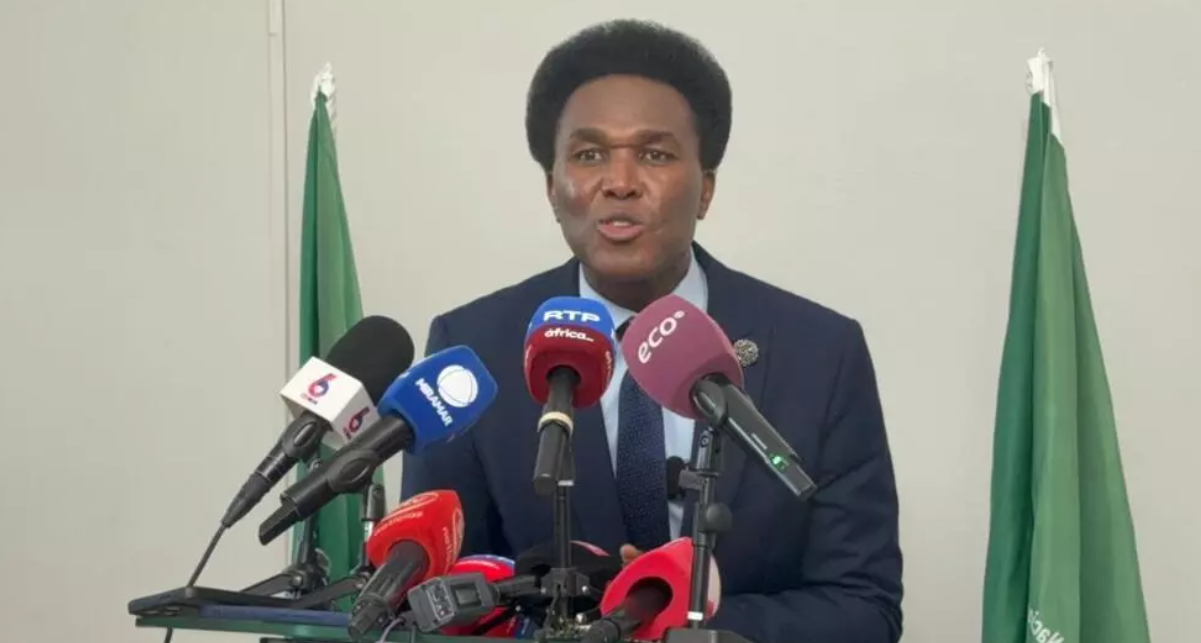
ANAMOLA (National Alliance for a Free and Autonomous Mozambique) will only distinguish itself from other political parties if it builds internal systems that embody the principles of good governance it claims to defend, said Rosário Fernandes.
“The main difference between the new party and traditional political formations should not lie only in discourse, but above all in how it organizes itself, finances itself, and accounts for its actions,” Fernandes wrote in a letter to ANAMOLA ahead of its first national convention held from 20 to 22 June, in the northern city of Nampula.
A former chairperson of Mozambique’s Tax Authority and the National Institute of Statistics, Fernandes has been known to speak truth to power and possess a fierce independent streak. His message is not new, and that is precisely what makes it politically meaningful. Hence, his letter should be taken seriously by ANAMOLA.
With Venâncio Mondlane now formally elected president with 94.04% of the delegates’ votes, the party enters a new phase. The period of asserting its existence as a political force is over. What follows is the more demanding work of institutionalisation: the construction of rules, procedures, and internal discipline that can sustain a political organisation beyond the charisma of its leadership or the discontent of its supporters. Fernandes’ intervention is a reminder that enthusiasm is not a structure, and protest energy is not a governance model.
His emphasis on transparency, financial discipline, and regular accounting is not merely technical. It is a political test. A party that aspires to govern must first demonstrate that it can govern itself. Fernandes warns that without clear funding sources, permanent auditing mechanisms, and a culture of accountability, ANAMOLA risks falling into the same patterns it criticizes in the ruling party.
The caution is rooted in continental experience: African political history is full of movements that rose to power promising rupture and ended up replicating the very practices they once condemned. His message is that ANAMOLA must avoid becoming another chapter in that familiar story.
The letter also carries a strategic appeal: Fernandes urges ANAMOLA to identify the ruling Frelimo party as its main adversary. He argues that this would discourage fragmentation within the opposition
But even this appeal is framed through the lens of governance: unity is not simply a tactical necessity, but part of the broader discipline required for a party that wants to be taken seriously as a governing alternative.
Ultimately, Fernandes’ intervention is less a critique than a roadmap. ANAMOLA has already shown that it can mobilize public frustration and attract political energy. The real challenge now is transforming that momentum into institutional strength – building systems, cultivating cadres, and establishing a culture of transparency that can withstand the pressures of political competition and the temptations of power. His message is clear: if ANAMOLA wants to govern the country, it must first prove that it can govern itself.
@2026, Mozambique Insights. All Rights Reserved