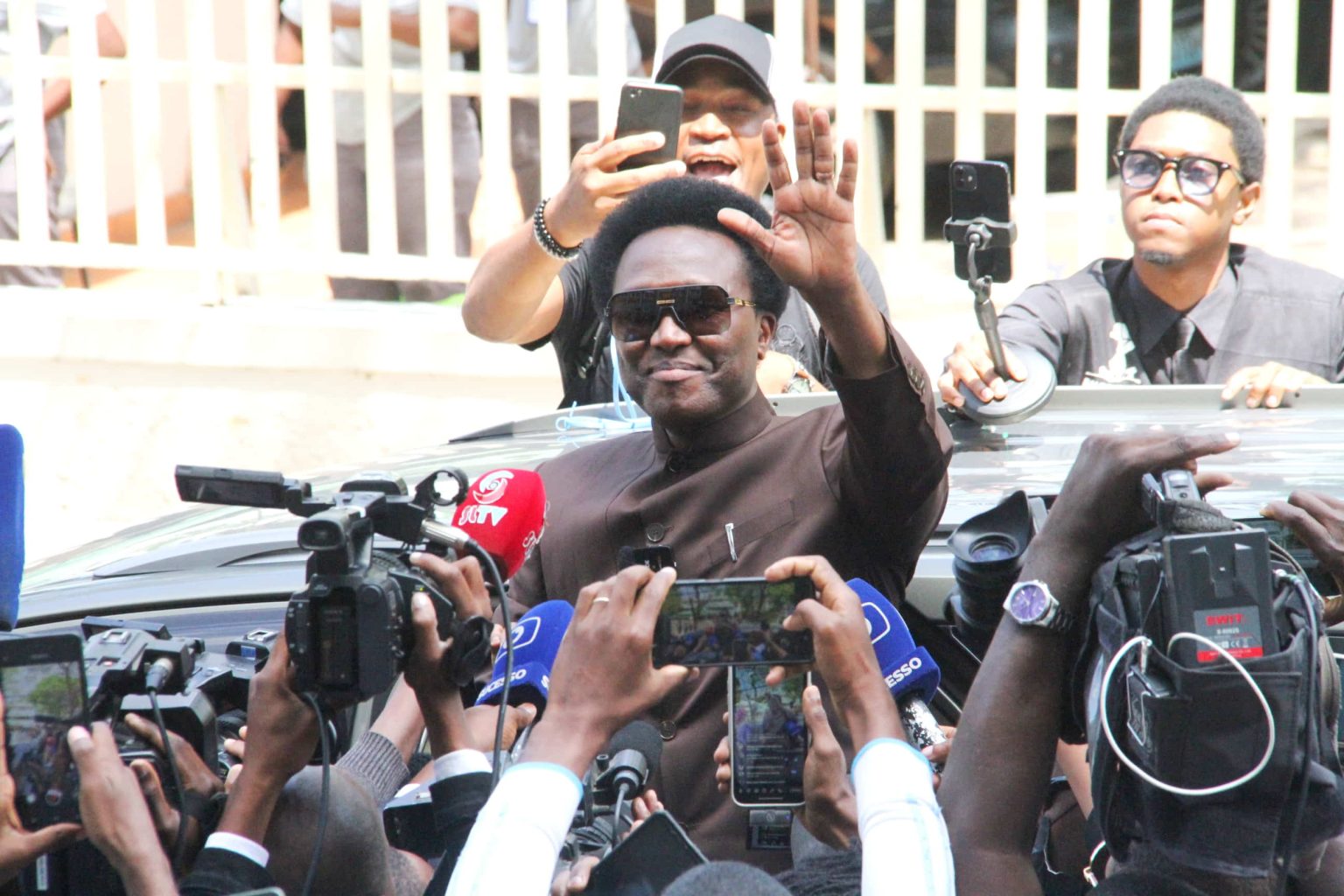
Mozambican opposition politician Venâncio Mondlane on Wednesday exchanged barbs with lawyer Rodrigo Rocha, who appears as a private prosecutor in the trial of the former in the Supreme Court.
Mondlane is accused of five criminal charges by the Attorney-General’s Office (PGR) in connection with the unrest that followed the much-contested 2024 general elections. The charges include public apology from a crime; incitement to collective disobedience; public instigation to commit a crime; instigation of and incitement to terrorism.
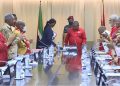
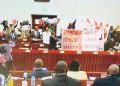
What began as a debate over evidence quickly degenerated into a direct confrontation, forcing Supreme Court justices to step in and restore order in the courtroom.
The confrontation unfolded as prosecutors continued their efforts to link Mondlane’s public statements during the 2024 post-election protests to acts of violence that followed across different parts of the country. Throughout the hearing, the prosecution sought to challenge Mondlane on issues ranging from attacks on police officers to the destruction of toll gates and the occupation of public facilities.
Mondlane pushed back firmly, repeating a position he has maintained throughout the proceedings: that he never instructed anyone to kill, attack, or destroy property. When confronted with new evidence and testimony presented by the prosecution, he rejected any suggestion that the incidents were the result of his political messaging or directives.
The hearing was also marked by a procedural battle over the admission of new evidence. Defence lawyers objected to its inclusion, arguing against the late introduction of additional material. After extensive argument from both sides, the Supreme Court ruled that the evidence would be admissible while reaffirming Mondlane’s right to challenge it through cross-examination and rebuttal.
Comment
For much of this trial, the most important battles have taken place through legal arguments, procedural objections and competing interpretations of evidence. On Wednesday, however, those tensions became visible.
The exchange between Mondlane and Rocha was striking not because courtroom disagreements are not unusual, but because it exposed how emotionally and politically charged the proceedings have become. As the prosecution moves closer to the heart of its case, the pressure on both sides appears to be increasing – it doesn’t help that Rocha is a known political shill, who mostly comments on television in defense of the ruling Frelimo party.
At the centre of the trial is a difficult question: can a political leader be held responsible for violence committed by supporters who claim to have acted in response to his message? The prosecution believes the answer is yes and is attempting to build that connection through documentary evidence, testimony and public statements. The defence insists that political speech, however influential, cannot automatically be equated with criminal responsibility for the actions of others.
That disagreement is no longer playing out only through legal filings and witness testimony. It is increasingly shaping the atmosphere inside and outside the courtroom itself.
The intervention by the justices served as a reminder that the trial remains a legal process, despite the political weight it carries. Yet the confrontation also highlighted a broader reality: this case is about more than determining the criminal liability of a single defendant. It has become a struggle over how Mozambique’s post-election crisis will be understood, who bears responsibility for its consequences, and how far the law can go in assigning accountability for political mobilisation.
As the proceedings move forward, moments of tension such as Wednesday’s confrontation are likely to attract as much public attention as the evidence itself. In a trial already defined by competing narratives, every clash inside the courtroom risks becoming part of the story outside it.
@2026, Mozambique Insights. All Rights Reserved