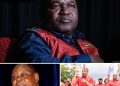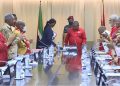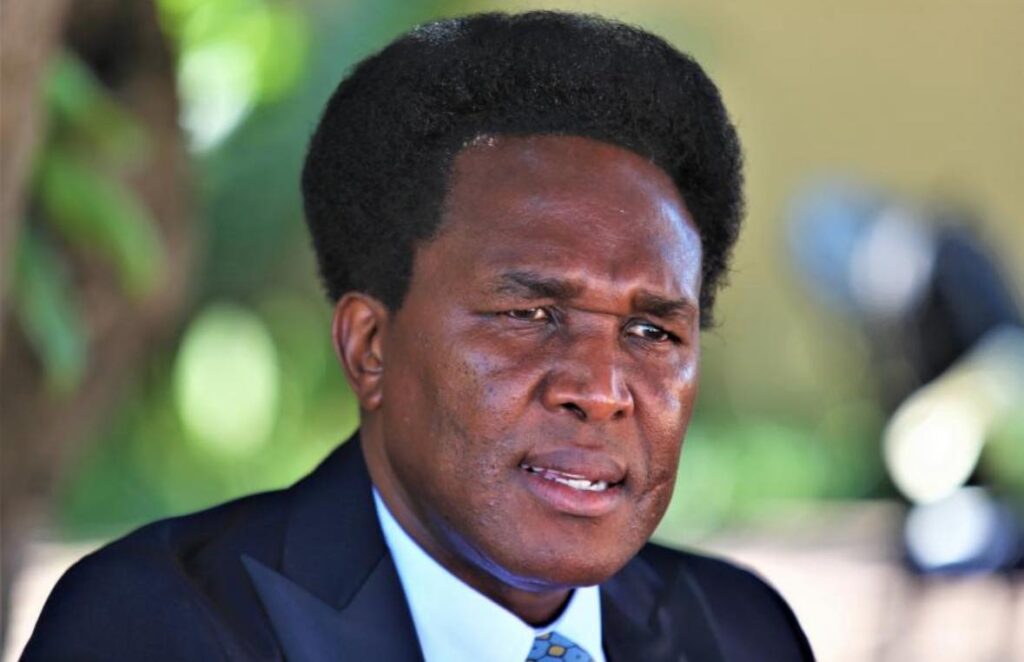
Mozambican opposition politician and former presidential candidate Venâncio Mondlane on Tuesday directly challenge the prosecution’s case, rejecting allegations that he promoted radical ideas, incited violence, or played a role in organising the unrest that followed the disputed 2024 elections.
Speaking before six Supreme Court justices, Mondlane went beyond denying the charges and attacked the credibility of the evidence itself, claiming that a key audio recording used against him was fabricated and demanding an independent examination of its authenticity.
Much of the hearing focused on Mondlane’s effort to dismantle the prosecution’s narrative. Responding to accusations that he spread extremist rhetoric and sought to undermine the democratic order, he argued that his public statements consistently called for civility and restraint during post-election demonstrations. To support his position, he asked the court to review excerpts from his livestreams, which he said would show repeated appeals for peaceful conduct by his supporters.
The sharpest confrontation came over an audio recording that forms part of the prosecution’s evidence. Mondlane told the court that the recording was false and accused investigators of using a manipulated file to build their case against him. He also questioned documents attributed to mobile phone operators, arguing that they lacked basic identifying features such as signatures or official branding. According to his account, authorities initially authorised the interception of multiple communications but ultimately
retained only the recording that had already been circulating on social media, raising questions, he argued, about how the evidence was collected and preserved.
To substantiate those claims, the defence requested that the forensic expert responsible for analysing the recording testify before the court. The objective is to establish whether the file is genuine, where it originated, and whether its integrity can be independently verified.
Mondlane also pushed back against allegations linking him to violence during the post-election protests.
When questioned about a demonstration called for 20 October 2024, he said the gathering had been intended as a tribute to his then lawyer Elvino Dias, who had been killed the previous evening. He rejected suggestions that the mobilisation was part of a strategy to encourage unrest or destabilise public order.
Another significant part of his defence centred on the contested 2024 election results. Mondlane referred to statements by international observers, Constitutional Council rulings, and public remarks made by Brazão Mazula, a university professor and former head of the National Elections Commission (CNE), and Graça Machel, social activist and former first lady, that serious irregularities had affected the electoral process. The Supreme Court agreed to the defence’s request to hear testimony from both figures, despite objections from the prosecution.
The opposition politician also disputed claims by toll-road operator REVIMO that it suffered more than 210 million meticais (over $3.2 million) in losses during the protests, arguing that the figures presented in court require stronger documentary evidence. He further rejected terrorism-related accusations, contending that scrutiny should also be directed at the conduct of security forces during the crackdown on demonstrations.
With the defence having concluded its questioning of the defendant, the trial is expected to move into a new phase with the appearance of prosecution witnesses.
Comment
The sixth day of proceedings marked a noticeable shift in the defence's strategy. Rather than simply rebutting the charges, Mondlane sought to put the investigation itself on trial. His central argument was not only that the allegations are wrong, but that the evidence underpinning them may be unreliable.
The dispute over the audio recording is especially important because it touches on a broader issue that extends beyond this case: the credibility of digital evidence in politically sensitive prosecutions. Court records indicate that investigators received judicial authorisation to intercept communications.
However, the question raised by the defence is whether the contested recording genuinely originated from those authorised operations and whether its authenticity can be demonstrated to the court’s satisfaction.
That distinction matters. A judicial authorisation to collect communications does not automatically validate every piece of evidence later presented in court. By demanding technical scrutiny of the recording, the defence is effectively challenging the chain of custody, integrity and provenance of one of the prosecution’s most significant pieces of evidence.
The decision to hear testimony from Graça Machel and Brazão Mazula also broadens the scope of the proceedings. Their appearances could bring wider questions about the legitimacy of the 2024 elections and the origins of the post-election crisis into a trial that has so far focused primarily on criminal responsibility.
As the case moves into the witness stage, the burden will increasingly shift to the prosecution to demonstrate not only that its allegations are credible, but that the evidence supporting them can withstand rigorous examination. After a day dominated by challenges to the investigation itself, the strength and reliability of the prosecution's evidence now appear likely to become one of the defining issues of the trial.
@2026, Mozambique Insights. All Rights Reserved