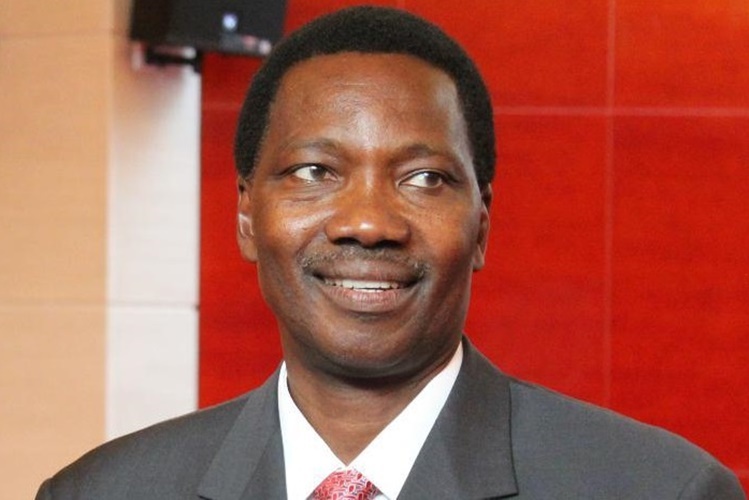
When Rogério Zandamela steps down from the helm of the Bank of Mozambique, he will leave behind a portrait that, at first glance, seems almost immaculate. Inflation has been broadly stable, and international reserves have been rebuilt after years of turbulence. It is the kind of photograph any central banker would proudly frame on the wall upon departure. Yet, as is often the case in monetary policy, the frame hides more than it reveals.
The sacrifice rate, that is, the amount of economic growth a country forfeits for every percentage point of inflation reduced, is the invisible number in Zandamela’s farewell narrative. And it is invisible for a reason: it shows that stability was not free. According to Mozambique’s National Statistics Institute, inflation in 2026 stands at 4.41%, a comfortable figure for any central bank. But the World Bank reports that in 2025, Mozambique’s economy contracted by 0.5%, a figure that cannot be explained solely by external shocks or structural vulnerabilities. It also reflects a monetary stance that kept credit expensive and scarce for years, suffocating the productive sector.
If one were to draw the trajectory of inflation since 2016, the line would descend steadily: from double-digit levels to the single-digit corridor that policymakers celebrate today. But if one draws the trajectory of Gross Domestic Product over the same period, the line does not rise in tandem. It wavers, hesitates, and sinks. Growth repeatedly fell below 3%, far from the potential of a young economy in need of investment, diversification, and confidence. The gap between these two lines – falling inflation and stagnant growth – is the visual expression of Mozambique’s sacrifice rate. And in Mozambique’s case, that gap is wide.
The country reduced inflation, but it lost growth. It tamed currency volatility, but it strangled productive credit. It rebuilt reserves but left firms competing for foreign exchange as if competing for water in a dry well. Monetary policy achieved what it set out to do, control prices, but it did so at a high cost to what it should have protected: the real economy.
And then came the early repayment of $700 million to the International Monetary Fund: a decision formally attributed to the government, but vigorously defended by Zandamela, who insisted that using the country’s reserves “in no way weakened” the central bank’s balance sheet and left Mozambique “much better off” than before. The repayment caused an 18% drop in reserves, the sharpest in a year, before later recovering. For many Mozambicans, the controversy was not about legality but about priorities: why should a cash‑strapped nation, struggling with underfunded hospitals, fragile schools, and a suffocated private sector, rush to repay the IMF ahead of schedule, especially when its own central bank governor had previously worked there? The optics were troubling. They fed the perception that macroeconomic virtue was being performed for external audiences while domestic needs remained unmet.
The matter of compensation deepened this unease. Zandamela and his directors earned salaries that, while technically lawful, shocked a public living through austerity, unemployment, and chronic underfunding of essential services. The contrast was stark: a central bank preaching discipline to the nation while its own leadership enjoyed remuneration packages that seemed calibrated for a different economy altogether. In a country where hospitals lack basic supplies and teachers wait months for allowances, the question is not merely whether the salaries were legal, but whether they were just. The optics were corrosive. They fed the perception that stability was being purchased with sacrifices borne by ordinary citizens, while the custodians of that stability were insulated from the very hardships their policies intensified.
The institutional chapter weighs just as heavily. The intervention in Moza Banco, later declared null by the Administrative Court; the transfer of the bank to Kuhanha, the pension fund of the central bank itself; and the ruling by the Central Public Ethics Commission that found the governor in violation of the Public Probity Law. These episodes are not footnotes. They are cracks in the institutional architecture that should serve as the guardian of trust.
Zandamela’s legacy is therefore ambivalent. Stability exists, but it was purchased at a high price. The sacrifice rate – the number absent from the central bank’s official communications – is the measure of that price. And the salary scandal, though often dismissed as a distraction, is in fact part of the same story: a story of stability achieved through burdens unevenly distributed. The next governor will inherit a tidy vault but a tired economy, and an institution that must rebuild not only its technical credibility but its moral authority.
Mozambique has stabilised. But it has stabilised by sacrificing growth, investment, credit, and confidence. The question that remains is simple and profound: did the country pay too much for too little?
@2026, Mozambique Insights. All Rights Reserved